

5 Drawing Exercises for Beginners
THESE SIMPLE EXERCISES ARE AMONG THE BEST ONE CAN PRACTICE AS AN ARTIST.
Below, I’ll get into why, but first, let’s list these bad boys out:

Straight lines
Shape Spree
Perspective Practice
Gestural Thumbnails
Compositional Thumbnails
Now, why are these my favorite drawing exercises for beginners?
Because it’s most of what you need packed into 5 exercises.
Here’s the rub - they’ve all got varying levels of difficulty too,
Have you ever watched a musician play a scale?
There are hundreds of ways to play just ONE of them.
Each time you consciously and deliberately play the scale, you’re building neural connections that will foster greater ability. When it becomes too easy (the point where you can do it without looking or thinking, hold a vigorous conversation, etc…) then it’s time to amplify the difficulty level.
So below, I’m going to show you how to do each of these exercises, and then I’ll give you variants for how to make them harder once you master the early forms.
Lastly, I’ll show you HOW they apply to drawing what you actually want to draw. No, I won’t just leave you with a set a wonderful exercises, I’ll give you the connection points between what you’re practicing, and how it applies.
Let’s dive in.
1 - Loosing the lines
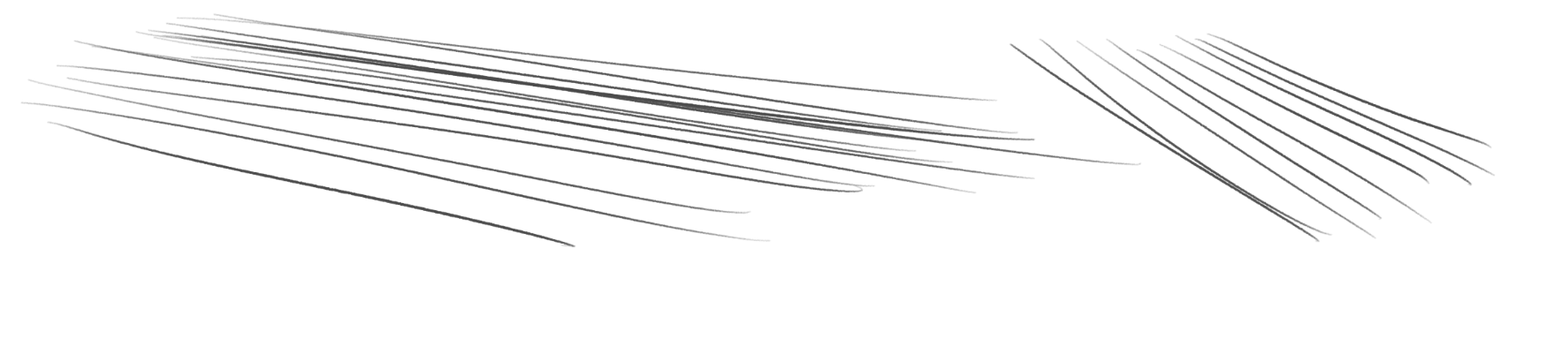
One of the biggest complaints I hear from beginners or would-be artists is “I can’t even draw a straight line!” Turns out, they require practice…Who knew? Drawing a straight line is crucial for man-made objects like vehicles and buildings, and drawing curved lines is crucial for more organic forms. Learning your lines isn’t just for acting, it’s for drawing too. Once you’re able to confidently and easily make marks of all sorts, your drawing toolkit grows to accommodate constructing everything from a cup to a full-blown person. Lines make it all happen.
Added difficulty: curved lines, shaded lines, longer lines.
2 - Shape Spree
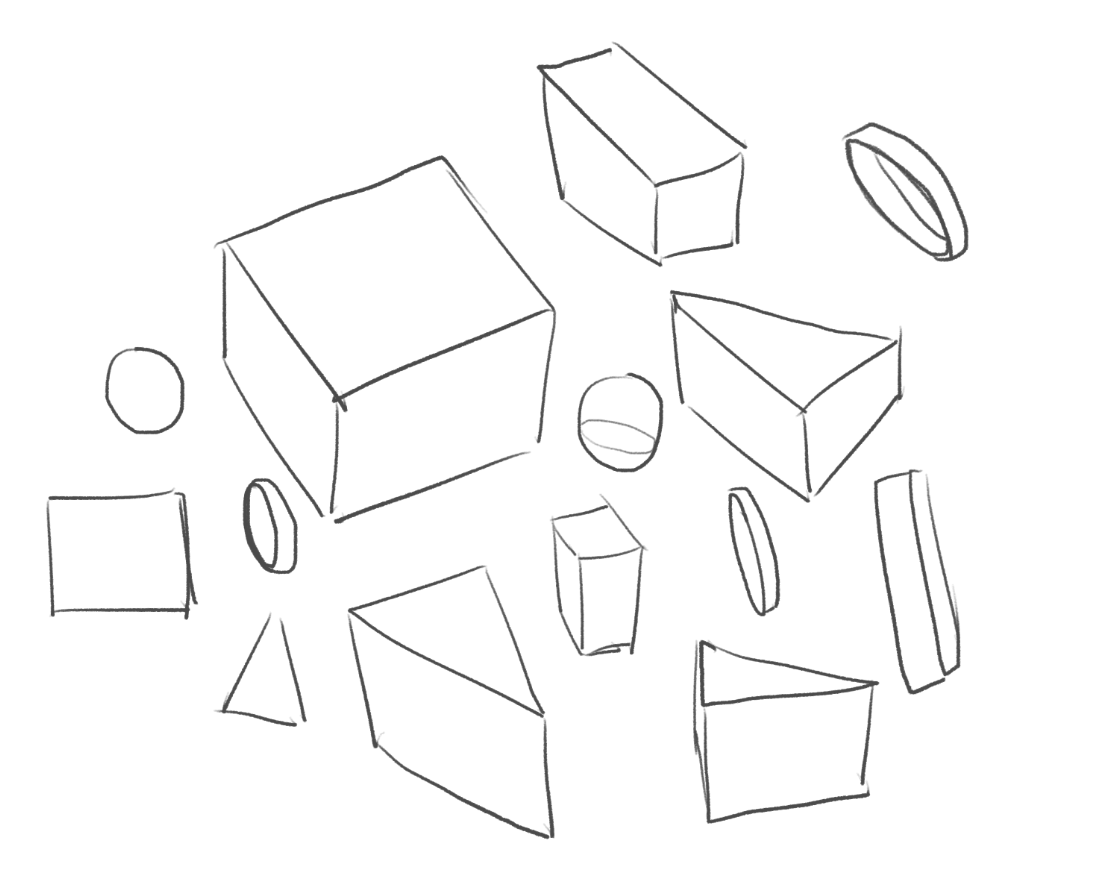
SHAPE SPREE SAMPLE
100 cubes
then 100 cones
then 100 spheres, etc…
This is one of my favorites. After you’ve got some straight-line confidence, you can begin blasting out shapes all over your digital documents and sketchbook pages. Basic shapes are the forms that all forms reduce down to. Cones, Cylinders, Spheres, Half-Spheres, Pyramids, Circles, Triangles, Ovals, Cubes, etc… All of these will help you build the basis for the more complex forms that you’ll be drawing thereafter.
Added difficulty: More complex geometry, shaded shapes.
3 - Perspective Practice
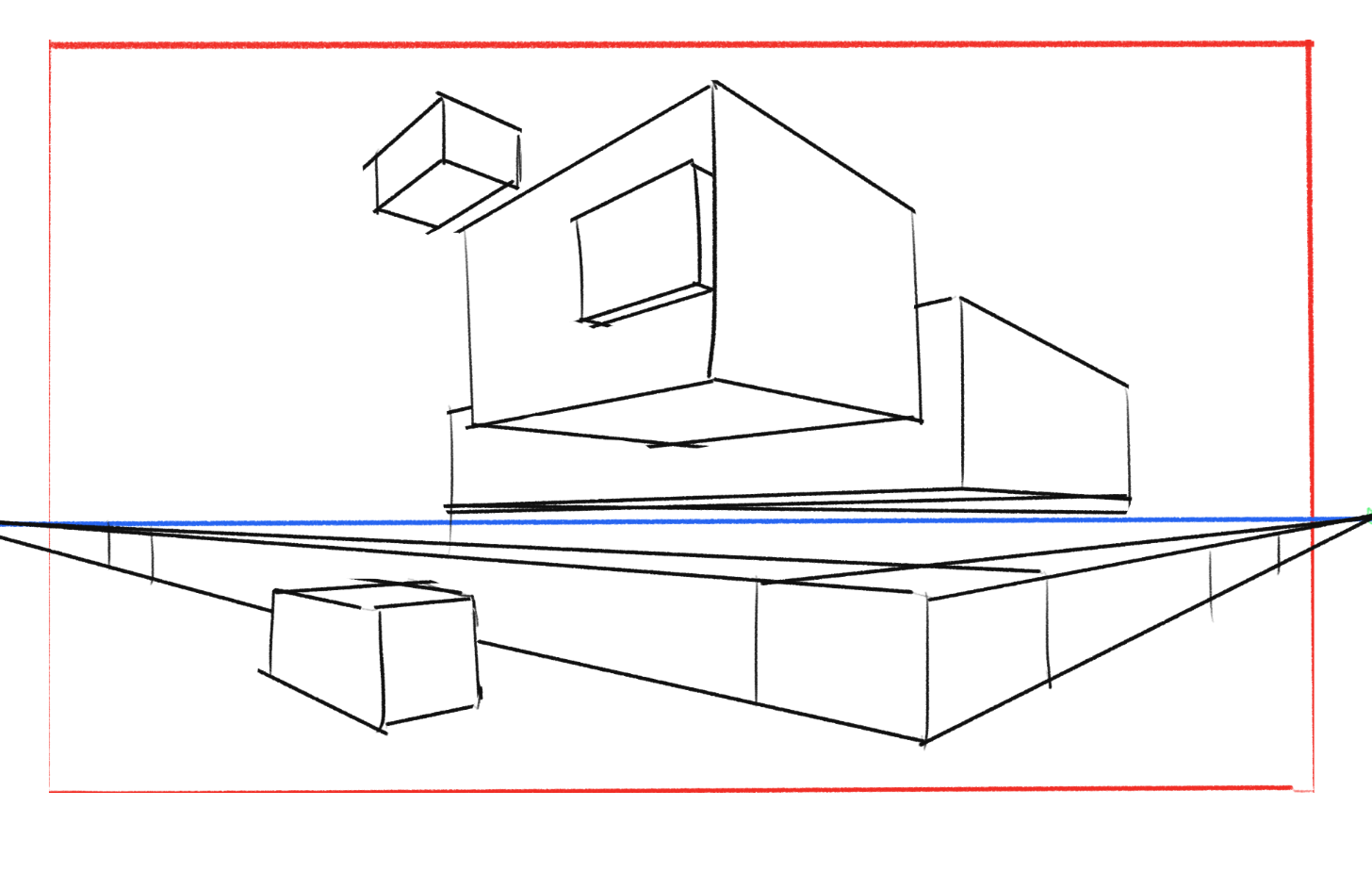
Practice with 2-point perspective
Perspective is integral. Really, it’s key. If you don’t learn perspective, your drawings will suffer. I promise. It hurts to spend hours on a drawing only to have deeply flaws perspective errors muddying the message of the work. That’s why we can do some simple drills to train our brains to work in accordance with this amazing fundamental.
Added difficulty: 2 point or 3 point perspective, all the way up to 4-point and fisheye perspectives.
4 - Gestural Thumbnails
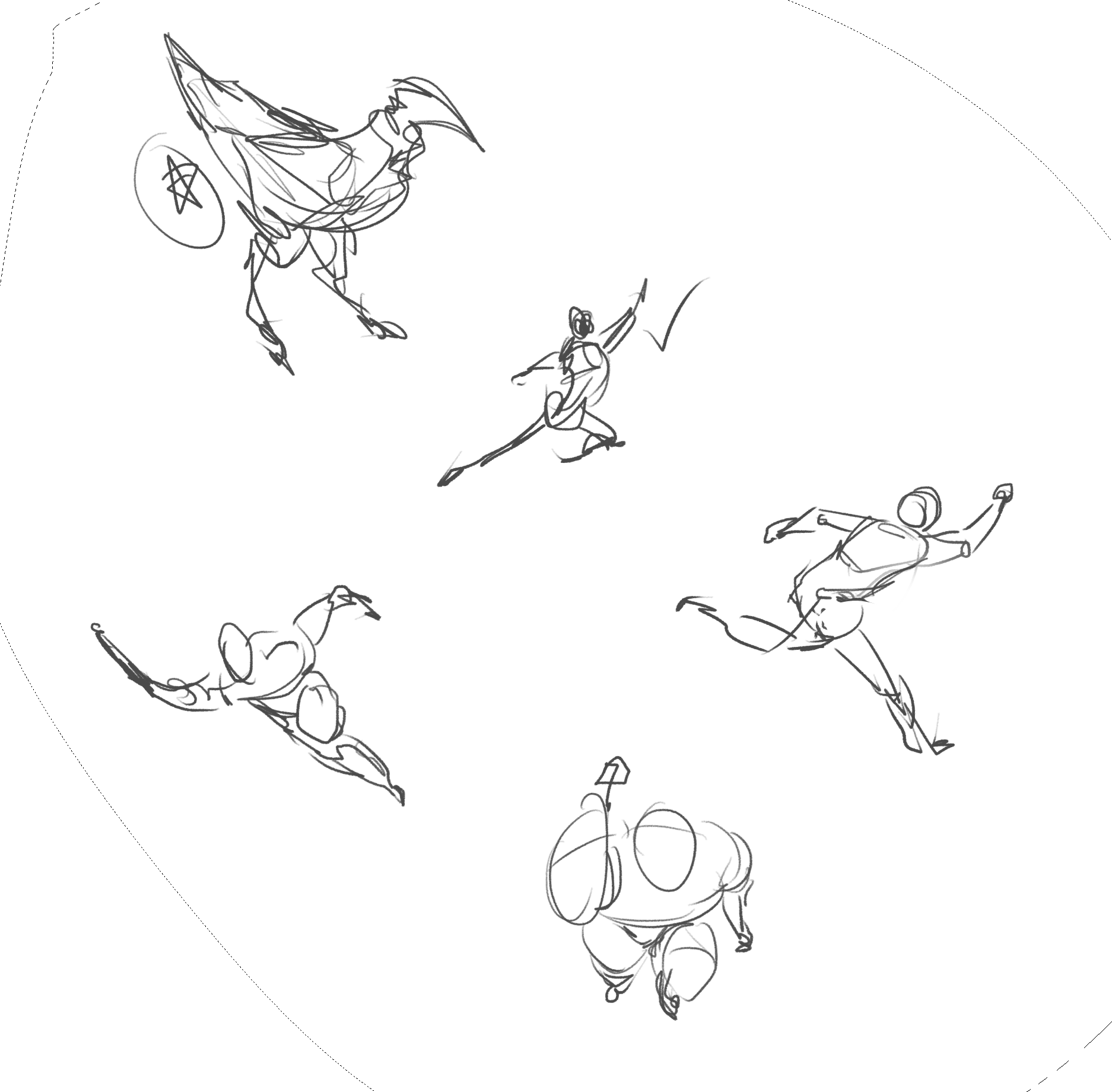
GESTURAL THUMBS
Fast & Easy
Who doesn’t like sketching little poses all over the page? With this technique, you can learn to get a powerful overview of human and animals forms in a matter of seconds. Having a small reference point will allow you to configure things like pose and proportion, making it way easier to blow the drawing up to something more rad and readable.
Added difficulty: Harder poses, complex animals, one pose at every angle.
5 - Compositional Thumbnails
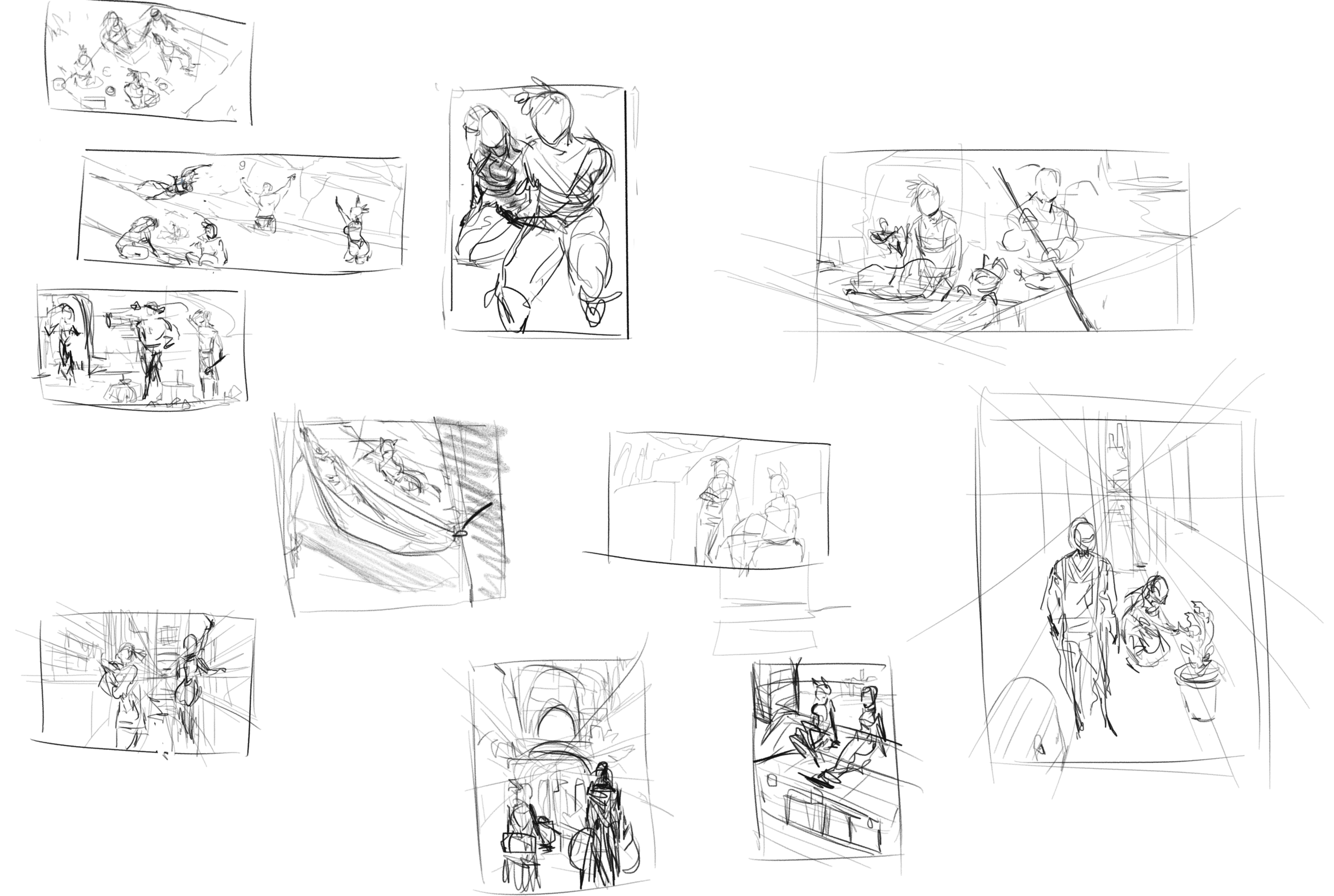
Ideas for later…
And skills for now!
The granddaddy of ‘em all is composition. It’s how you arrange shapes, lines, forms, subjects, objects, and everything in between on a picture plane (like a piece of paper.)
Added difficulty:
Try doing them exclusively in black and white, or even color thumbnails. Try to do one scene at various angles.
Here’s a demonstration video of some of drawing these exercises in action:
Conclusion:
If you’re practicing these exercises for at least 15-25 minutes per time, and racking up 2-3 of those sessions each day, you’ll notice a new ease begin to take shape in your workflow. There’s no feeling like adding levels of skill with each passing day. Before diving into your work, just be sure to do the relevant kind of practice. If you’re working on a line-heavy piece, do the line exercises— or if you’re working on a figure drawing, the gestural ones will serve you well.

Learn the principles of art.
Have you ever wanted to make cute, easy drawings? Or you might get stuck trying to think of poses for drawings.
When you have drawing ideas, do they always come out looking wrong or off? Like you don’t know where to put the lines?
I was just like you, until I discovered the art fundamentals that changed everything for me— no talent required.
Seriously—Whatever you want to draw, whether it’s tigers, anime girls, castles, butterflies, or dogs— this course will teach you everything you need to know.
In these video lessons, you’ll learn every fundamental that masterful artists have used and developed for centuries, taught to you in short, easy-to-digest lessons.
These are the basics of drawing that will allow you to draw in any style, and even develop your own.
No longer will you have to fear the blank page, or making “bad” drawings.
You’ll learn drawing exercises used by industry pros that make learning to draw seem easy— almost effortless.
The journey is yours, and you are the hero of it.
If you have ideas you want to draw, this course will serve you well— even if you just want to doodle, you’ll do it with more fun, freedom, flow, and accuracy than ever.
And yes, we start from square one together. The simplest shapes, and the most basic building blocks will accompany your hand and mind.
You can start with no knowledge, or even inaccurate knowledge (which I invite you to throw into the bushes on your way inside.) And grow to become a self-directed, self-taught artist.
We’ll Cover:
Proportions
Construction
Warm-ups
Easy to Intermediate drawings
Light and Shadow
Perspective Basics
The Human Figure
The Human Face
Basic Anatomy
Basic Shapes
Composition 101
Line theory and line work exercises
Drawing with and without reference
easy drawings
ideas to draw
how to draw a body
how to draw hair
how to draw a face
And more!
You will have a clear roadmap of the journey laid out for you. You will know exactly what to do next, including when you’re ready to move from one assignment and lesson to another.
In the beginning you will need clearer guidelines, but as the course progresses, and you feel your drawing wings begin to develop, there will be more room to soar.
You will feel the unbridled joy of artistic ascent, rushing you to the skies of creative capacity.
Yes, drawing can feel like that.
But worry not, if you’re uncertain of yourself or if you have what it takes, I assure you that you needn’t. You have exactly what it takes to learn how to draw.
If you will set aside your judgements of good or bad, to simply draw with the intent of improvement, and if you will stoke daily the fires of your creative hearth (which I will show you a bevy of ways to do) then you cannot help but move forward.
Lesson Plan:
1. Drawing Basics - Starting Simple
2. Fundamentals - The basis of drawing evolution
3. Drawing from life - Going to the source and what it teaches
4. Quick Sketching 101 - laying foundations fast
5. Drawing Development - Refining your base work
6. Easy and effective perspective - Create an instant feeling of space.
7. Creative drawing - Using Reference as a path to success.
8. Shading and Values - Working with Light and the marks that describe it
Each lesson includes several videos around 3-20 minutes long, with exercises and assignments at the end of the lesson!
In other words, it’s always easy to take action.
Now, let's begin shall we?
All it takes is a few weeks of being consistent to gain more proficiency, and once you’re feeling that you could use a new challenge, step it up a notch.
Effectively, your work outside of your practices (the pieces you want to create) will challenge you enough, but having some strong exercises to warm and level you up makes drawing even more fun.
P.S. - REMEMBER THE FUNDAMENTALS!
If you’re still stuck or need more guidance, the beginner drawing course is a great place to start.
Thousands of artists have already taken the course since 2015, and with the 2nd edition released in 2022 beginners like you are improving their work even faster.
It’s guaranteed to help your skills sharpen week after week with the assignments, fundamentals, and exercises that await you.
Conclusion
These exercises will help you gain your footing as you learn to draw:
Straight lines
Shape Spree
Perspective Practice
Gestural Thumbnails
Compositional Thumbnails
And if you’re more committed, you’ll see improvement and deliberate practice even faster by enrolling in the BDC basics course - also known as the beginner drawing course 2nd edition.
Until next time, happy drawing!
- Tay
